
According to the direction dated November 28, all mobile phones that will be manufactured in India or imported after 90 days from the date of issuing of the order will need to have the app.
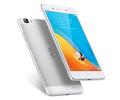
V1Max runs Vivo's FunTouch 2.1 operating system, which is based on Android 5.0 Lollipop.

The Enforcement Directorate has filed its first charge sheet in connection with its money laundering probe against Chinese smartphone maker Vivo-India and some others, official sources said on Thursday. The prosecution complaint was filed before the court of Special Judge Kiran Gupta in New Delhi on Wednesday under the criminal sections of the Prevention of Money Laundering Act and Vivo-India has been named an accused apart from those arrested in this case, the sources told PTI. The judge posted the matter for consideration on December 13.
A whopping Rs 62,476 crore has been "illegally" transferred by smartphone maker Vivo to China in order to avoid payment of taxes in India, the Enforcement Directorate said Thursday, as it claimed to have busted a major money laundering racket involving Chinese nationals and multiple Indian companies. This money is almost half of Vivo's turnover of Rs 1,25,185 crore, it said without stating the time period of the transaction. The crackdown on the leading Chinese company came after the federal probe agency found that three Chinese nationals, all of whom "left" India during 2018-21, and one other person from that country incorporated as many as 23 companies in India in which they were also helped by a Chartered Accountant, Nitin Garg.

The Enforcement Directorate has arrested four persons including the MD of the Lava International mobile company and a Chinese national as part of its ongoing money-laundering probe against Chinese smartphone-maker Vivo, official sources said on Tuesday. They identified the four as Hari Om Rai, the MD of Lava International company, Chinese national Guangwen Kyang, chartered accountant Nitin Garg and a person called Rajan Malik. They have been taken into custody under the provisions of the Prevention of Money Laundering Act (PMLA).
Vivo, a brand of BBK Communication Technology that makes smart devices such as 4G Xshot handset, is now set to enter the fastest-growing smartphone market in India with the first launch planned later this month.

India doubled its exports of smartphones to $11.1 billion (about Rs 91,000 crore) in 2022-23 (FY23) over the previous year's figure of $5.48 billion (Rs 45,000 crore), thanks largely to the Apple juggernaut, according to data from the India Cellular and Electronics Association (ICEA). Union Minister for Communications, Electronics & IT Ashwini Vaishnaw said: "With the doubling of exports of smartphones to over Rs 90,000 crore, India is well on its way to becoming a leader in the global mobile device market." On the flip side, despite the government prodding Chinese companies to export more, their smartphone shipments fell steeply by 26 per cent from $214 million in FY22 to $157 million in FY23.

NavIC consists of a constellation of seven satellites and a network of ground stations and is touted to be more accurate than GPS.

Home-grown companies, including electronics manufacturing services (EMS) firm Dixon Technologies and mobile device maker Lava International, have started exploratory talks with Chinese sub-assemblies and component players for setting up joint ventures (JVs) in the country. Sources in the industry say many domestic companies have also had preliminary discussions with original design manufacturers (ODMs) in China to look at a JV model for manufacturing smartphones. Key ODM players in mobile devices in China include Longcheer, Huaqin, and Wingtech, which has already set up a plant in Tirupati.

Multinational conglomerate Tata Group has submitted its 'Expression of Interest' to become IPL title sponsor this year, joining education technology company Unacademy and fantasy sports platform Dream11 in a bid to replace Chinese mobile phone company Vivo for one season.

People in the know said that from social and digital media campaign teams to communications specialists -- all hands were on deck, and every possible post or campaign with the potential to intensify the crisis, was being tracked.

It has 18.9 per cent share of the market, down from 22.6 per cent for the third quarter of 2018 while Xiaomi has 27.1 per cent share.
 © 2026 Rediff.com - Advertise with us - Disclaimer - Privacy Policy - Sitemap - Feedback - About us - Terms of use - Grievances